Lens replacement surgery
Lens replacement, also called refractive lens exchange (RLE), swaps your eye's natural lens for an artificial lens chosen to reduce your need for glasses. It suits adults, usually over about 45, who need glasses for reading or have a strong prescription. Mr Sam Evans FRCOphth performs it at Werndale Hospital, Carmarthen.
- Over 8,000 cataract operations
- Doctify 4.95 from 56 verified reviews
- Consultant in west Wales since 2017
Who is it for?
Lens replacement may suit you if you:
- are in your mid-forties or older and now need glasses for reading, and
- would like to rely less on glasses for most of the day, or
- have a strong prescription and are not suitable for laser eye surgery.
It is the same operation as cataract surgery, done before a cataract has formed. Because it replaces the lens, you will not develop a cataract in that eye later.
Honest limits
Lens replacement is a good option for many people, but not everyone:
- Lenses that give near and distance vision can cause halos or glare around lights at night, which usually ease over months.
- Some people still need glasses for fine print or long drives.
- All eye surgery carries a small risk of complications. People who are very short-sighted have a slightly higher risk of retinal detachment.
- If your eyes are healthy and you are happy in glasses or contact lenses, there is no medical need to have it.
Mr Evans will tell you plainly if he thinks lens replacement is not right for you.
Your lens options
EDOF
Good distance and middle-distance vision, with fewer night-time halos than multifocal lenses.
Multifocal
Distance, middle and near vision, for the most freedom from glasses.
Monovision
One eye set for distance and one for near, using monofocal or toric lenses.
Fees are per eye and depend on the lens. Your quote is confirmed in writing after your consultation. See fees.
What happens
- ConsultationDetailed measurements and a conversation about how you use your eyes.
- Your planMr Evans recommends a lens and explains the trade-offs. Take time to decide.
- SurgeryDay case at Werndale, about 15 to 20 minutes per eye.
- AftercareDrops for about four weeks, then a check with your optometrist.
Common questions
What is refractive lens exchange?
Refractive lens exchange, or lens replacement, removes the natural lens of the eye and replaces it with an artificial lens chosen to reduce the need for glasses. It is the same operation as cataract surgery, done before a cataract forms. Mr Sam Evans performs it at Werndale Hospital, Carmarthen.
Am I too young for lens replacement?
Lens replacement usually suits people over about 45, once reading glasses are needed. Younger people with a working focusing lens often do better with laser eye surgery or an implantable contact lens. Mr Evans will advise on what suits your eyes.
Will I be completely free of glasses?
Many people need glasses much less, but complete freedom cannot be promised. Some people still use glasses for fine print or in dim light. Mr Evans will explain what is realistic for your eyes before you decide.
What are the risks of lens replacement?
Risks are similar to cataract surgery and include infection, inflammation and, rarely, reduced vision. Lenses for near and distance vision can cause halos at night. People who are very short-sighted have a slightly higher risk of retinal detachment. Mr Evans will go through the risks that apply to you.
How much does lens replacement cost?
Fees are per eye and depend on the lens you choose. You will get a written quote after your consultation, before anything is booked. See the fees page for consultation prices.
Related pages
Talk to us about your eyes
Request a consultation and we will be in touch within one working day. You don't need a GP referral to pay for your own treatment, and your optometrist can refer you directly.
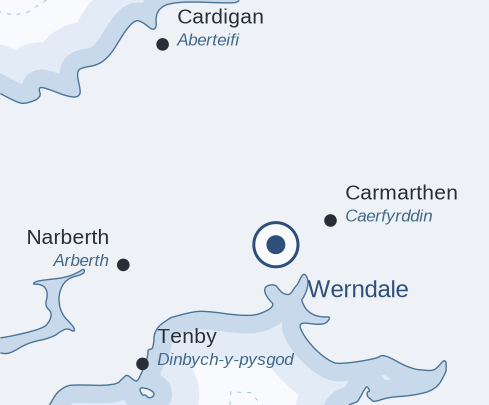
Werndale Hospital, Bancyfelin, Carmarthen SA33 5NT, just off the A40 about five miles west of Carmarthen.